
What We Offer
Our Services
A detailed technical breakdown of every service line we design, supply, install and support.
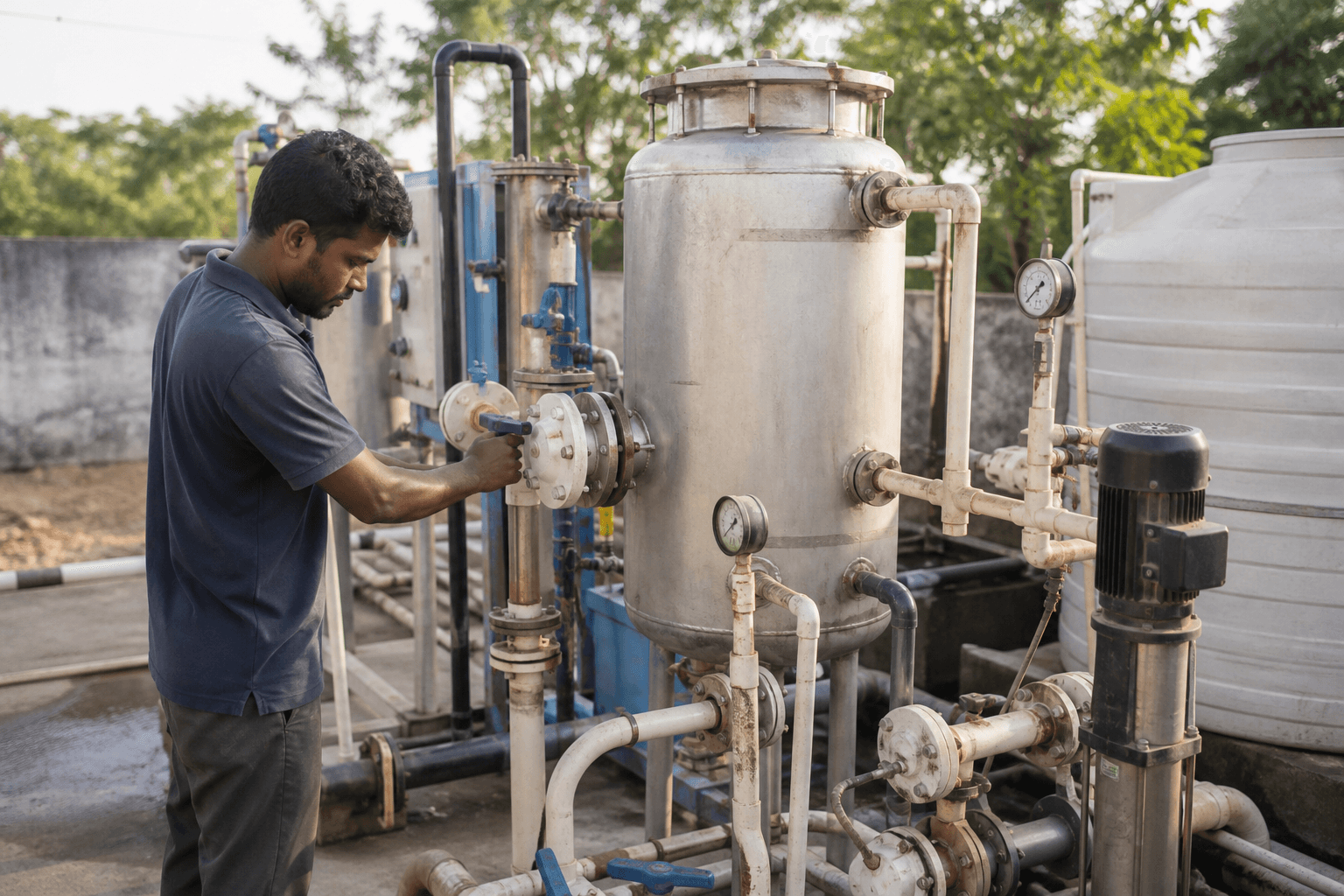
WTP (Water Treatment Plant)
A water treatment plant cleans incoming raw water before it reaches your taps or process lines, removing suspended solids, dissolved impurities and harmful microorganisms. The process runs through screening, coagulation, sedimentation, filtration and disinfection, engineered around your actual source water and load. We handle the complete scope in-house, from site study and design through supply, erection and commissioning, using OEM-grade materials for long-term reliability.
- Screening
- Coagulation
- Sedimentation
- Filtration
- Disinfection
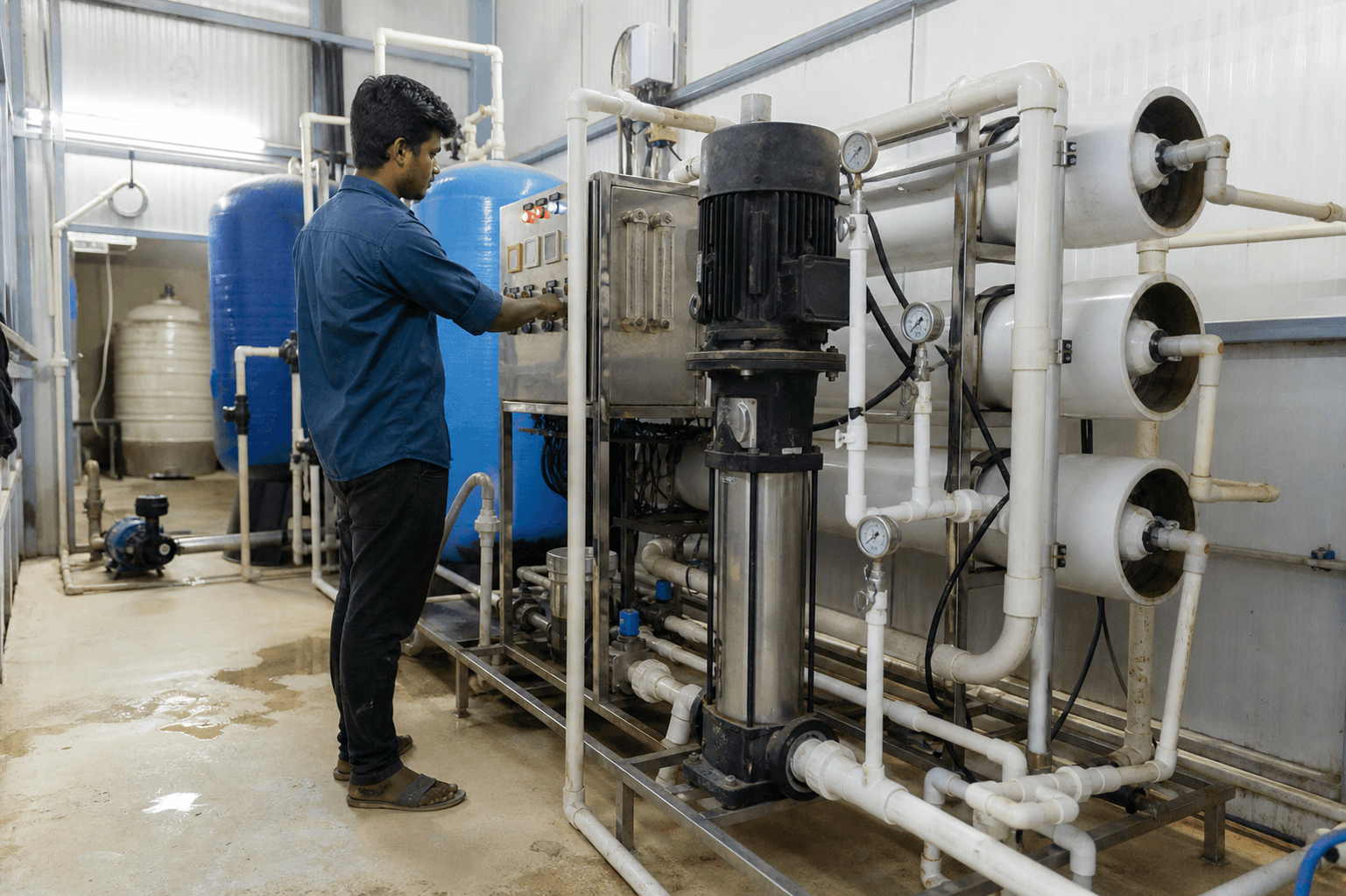
RO (Reverse Osmosis)
Our reverse osmosis systems are designed for any application that demands consistent, high-output purified water, from a single household unit to a full packaged drinking water plant. We supply standard and fully customised units, including automatic bottling plants, for domestic, industrial and commercial installations. Every system runs fully automatically, and we handle ongoing membrane care so output quality doesn't drift over time.
- High-output RO systems
- Standard and customised units
- Packaged drinking water plants
- Automatic bottling plants
- Domestic, industrial and commercial installations
- Fully automatic operation
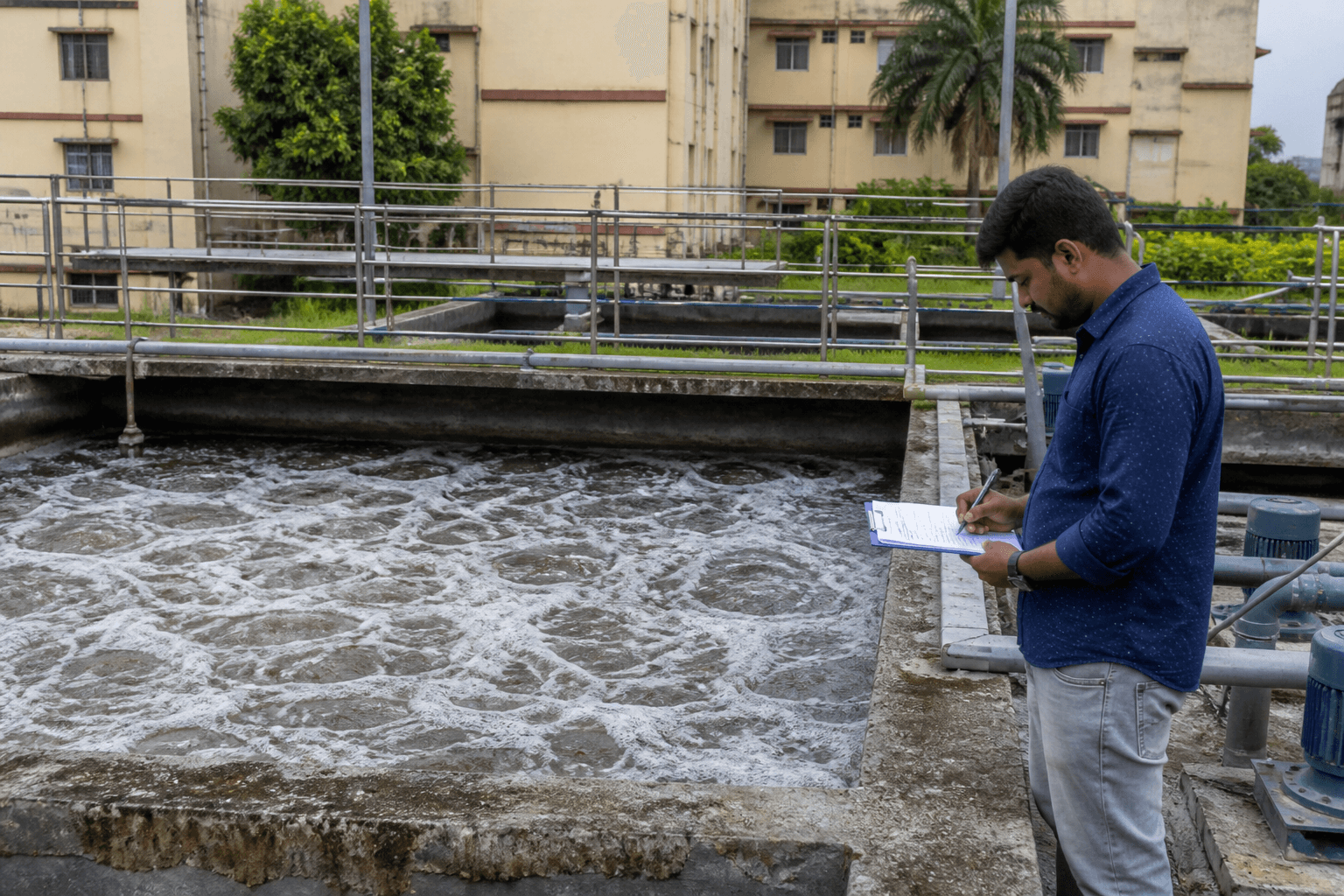
STP (Sewage Treatment Plant)
A sewage treatment plant cleans wastewater from homes, offices and institutions, removing solid waste, pathogens and organic pollutants before safe reuse or discharge. Pre-treatment removes floating and gritty material, primary treatment settles solids, and secondary treatment reduces dissolved organic load through COD/BOD reduction. Anaerobic digestion handles the resulting sludge, dewatered via centrifuge, belt filters or drying beds, all sized around your daily flow and occupancy.
- Pre-treatment: floating and gritty material removal
- Primary treatment: settleable solids
- Secondary treatment: dissolved organic matter, COD/BOD reduction
- Anaerobic digestion
- Sludge handling via dewatering centrifuge, belt filters and drying beds
ETP (Effluent Treatment Plant)
An Effluent Treatment Plant (ETP) treats industrial wastewater from factories and processing units, removing contaminants before the water is discharged into a water body or municipal drain, or returned to the process as recycled water. The objective is to bring treated water to the standards set by the relevant State Pollution Control Board (SPCB) and the CPCB, under the Water (Prevention and Control of Pollution) Act, 1974.
Our systems combine biological treatment (aerobic/anaerobic, activated sludge) with physio-chemical treatment (settlers, clarifiers, chemical dosing), adding a tertiary polishing stage where required, configured around the specific chemical and biological load of your effluent. We design ETP facilities for small and medium-scale industrial estates, matched to your discharge or reuse target.
The contaminants an ETP must handle vary by industry — pharmaceutical ETPs manage solvents and active pharmaceutical ingredient residues, textile ETPs handle reactive dyes and surfactants, and chemical ETPs deal with heavy metals, dissolved organics and process chemicals. The treatment sequence is broadly similar across industries, even though the specific chemistry differs.
- Biological: aerobic/anaerobic, activated sludge
- Physio-chemical: tube settler, clarifier, air filtration, chemical dosing and mixing
- Disinfection: UV light, ozone or chlorine to kill pathogens
- Tertiary: pressure sand filter, activated carbon filter
Industries That Require This
In critically polluted areas designated by CPCB, Zero Liquid Discharge (ZLD) compliance is also mandated — no treated water may be discharged outside the facility boundary.
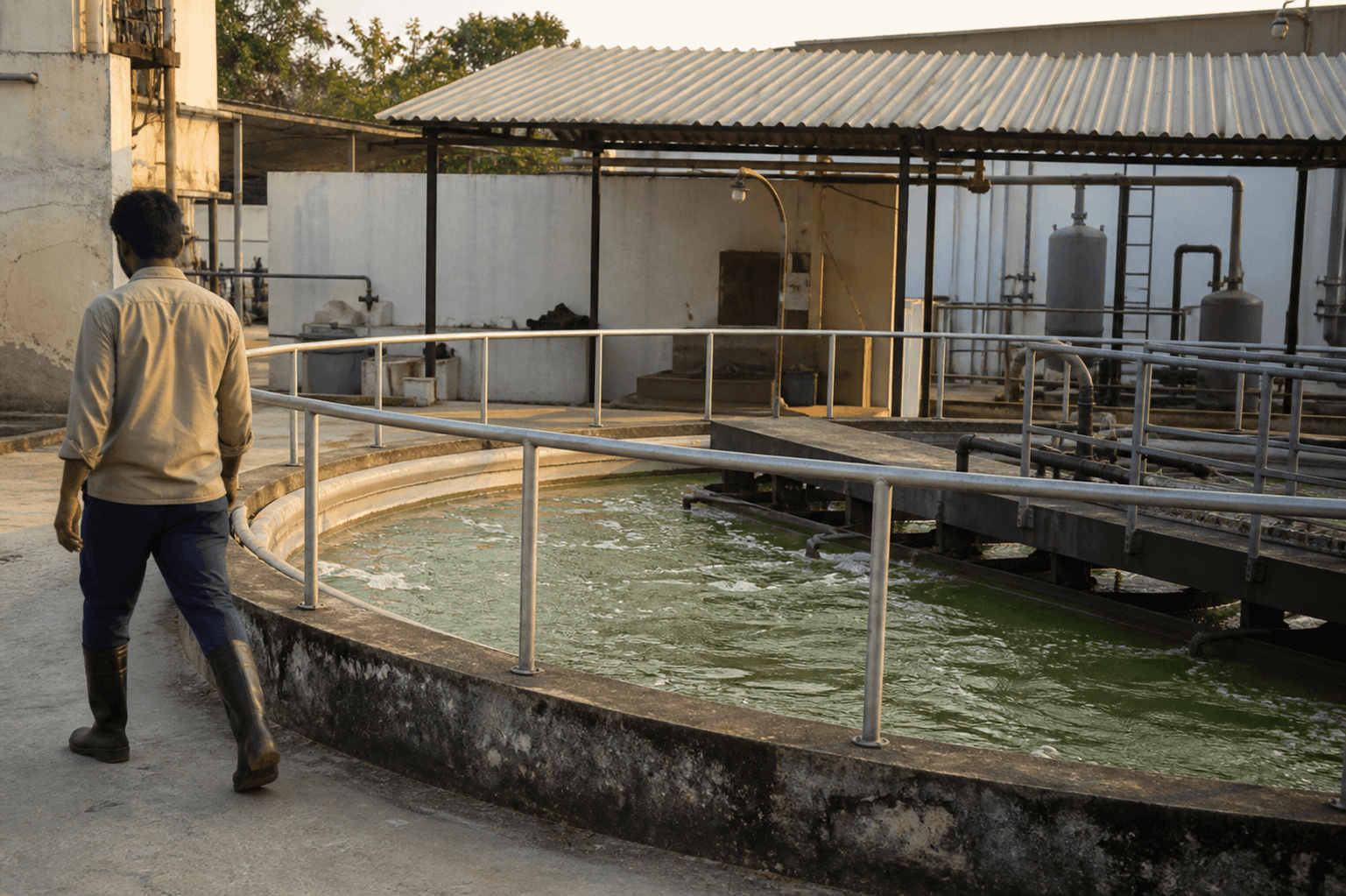
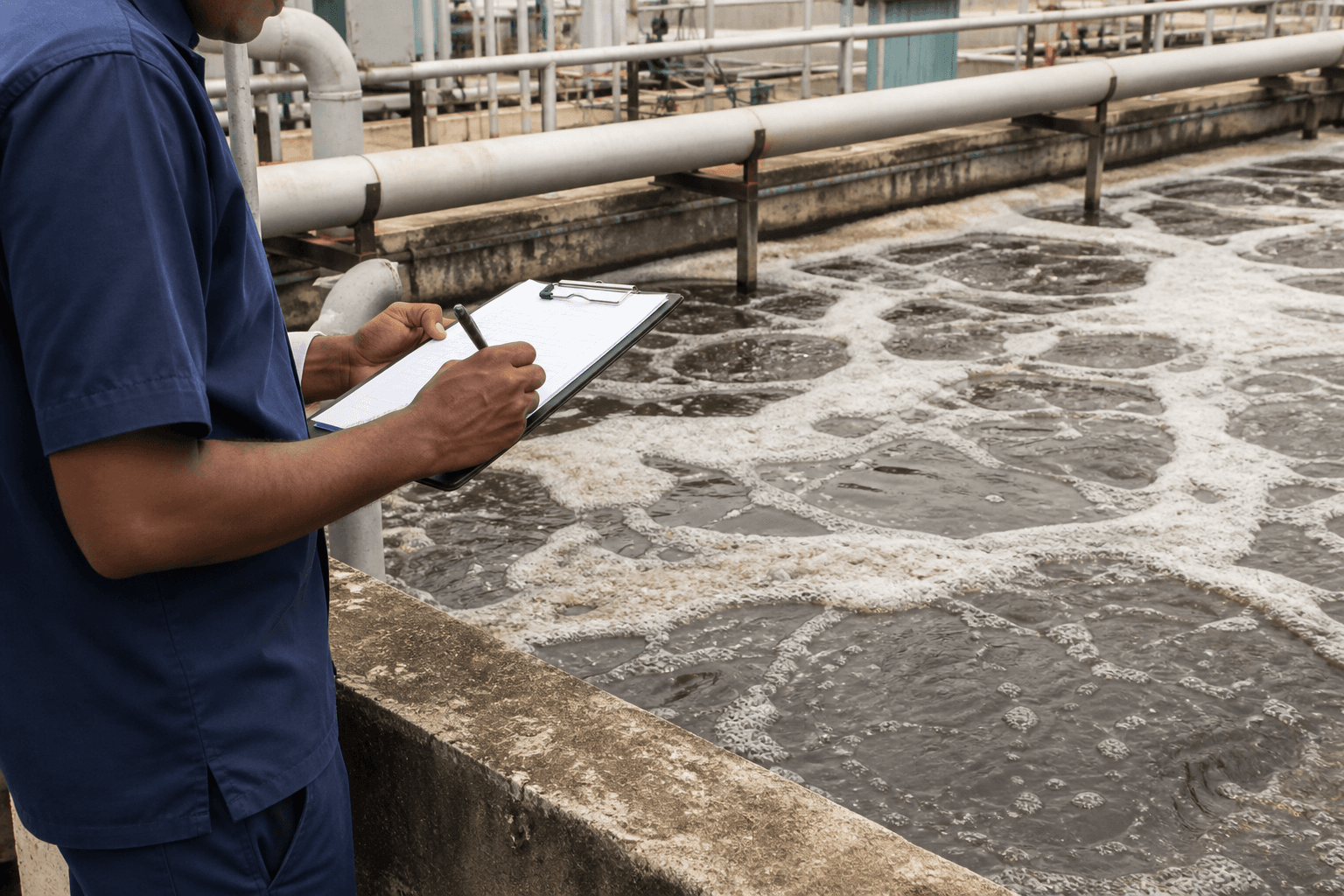
Biological Treatment
Biological treatment uses living microorganisms to break down dissolved organic pollutants that physical filtration can't remove, forming the core stage of most effluent and sewage systems. We configure an aerobic process for fast, oxygen-fed breakdown or an anaerobic process for high-strength waste streams, most commonly run through a continuously recirculated activated sludge process. This stage significantly reduces COD and BOD before water moves to physio-chemical or tertiary treatment.
- Aerobic process
- Anaerobic process
- Activated sludge process
Physio-Chemical Treatment
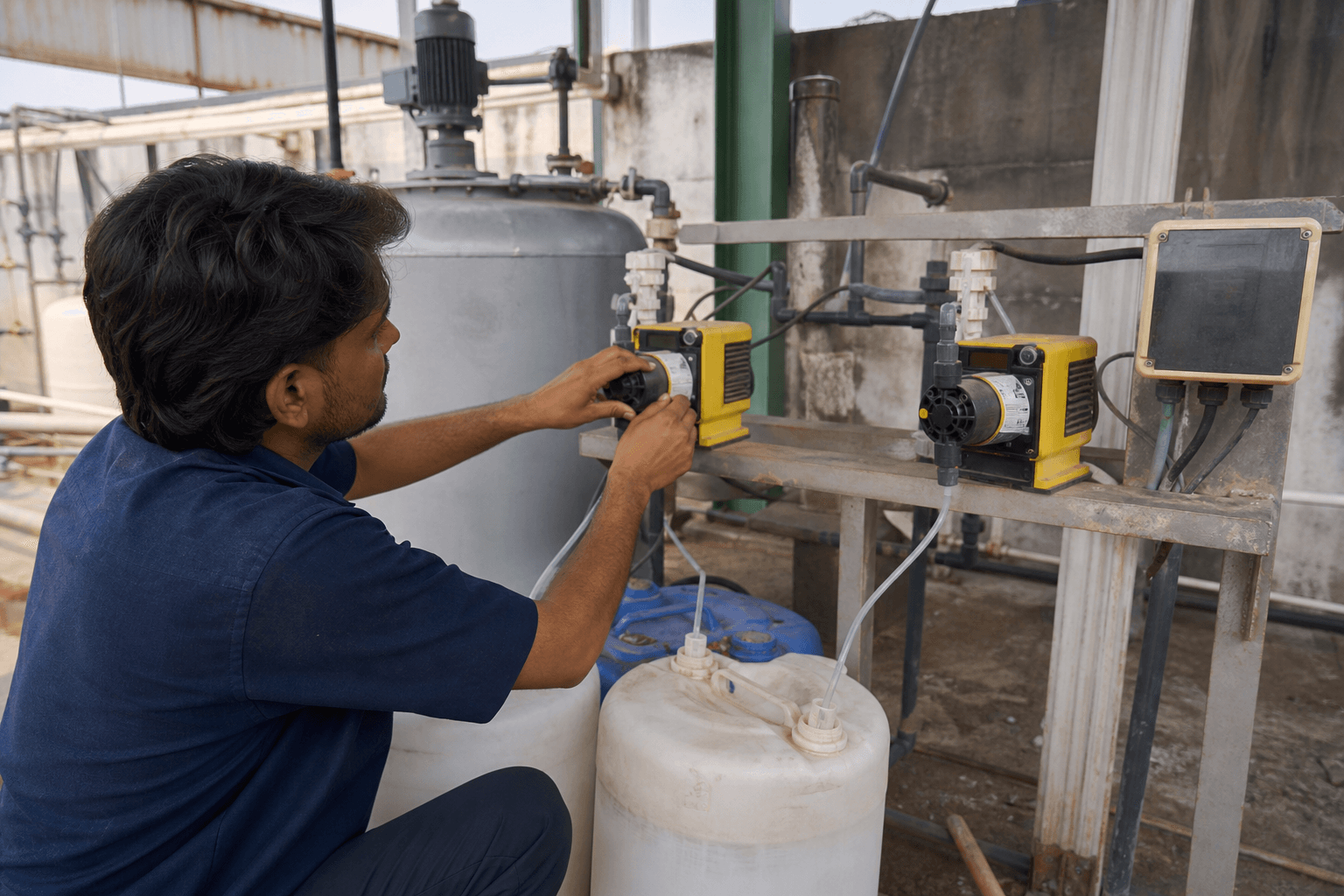
Physio-chemical treatment removes suspended solids and fine particulates that biological processes leave behind, combining physical separation with controlled chemical reactions. Tube settlers and clarifiers let solids settle under gravity while air filtration strips finer particulates, and precise chemical dosing coagulates what remains. A final disinfection step neutralises pathogens before the water moves to tertiary treatment or discharge.
- Tube settler
- Clarifier
- Air filtration
- Chemical dosing and mixing
- Disinfection
Tertiary Treatment
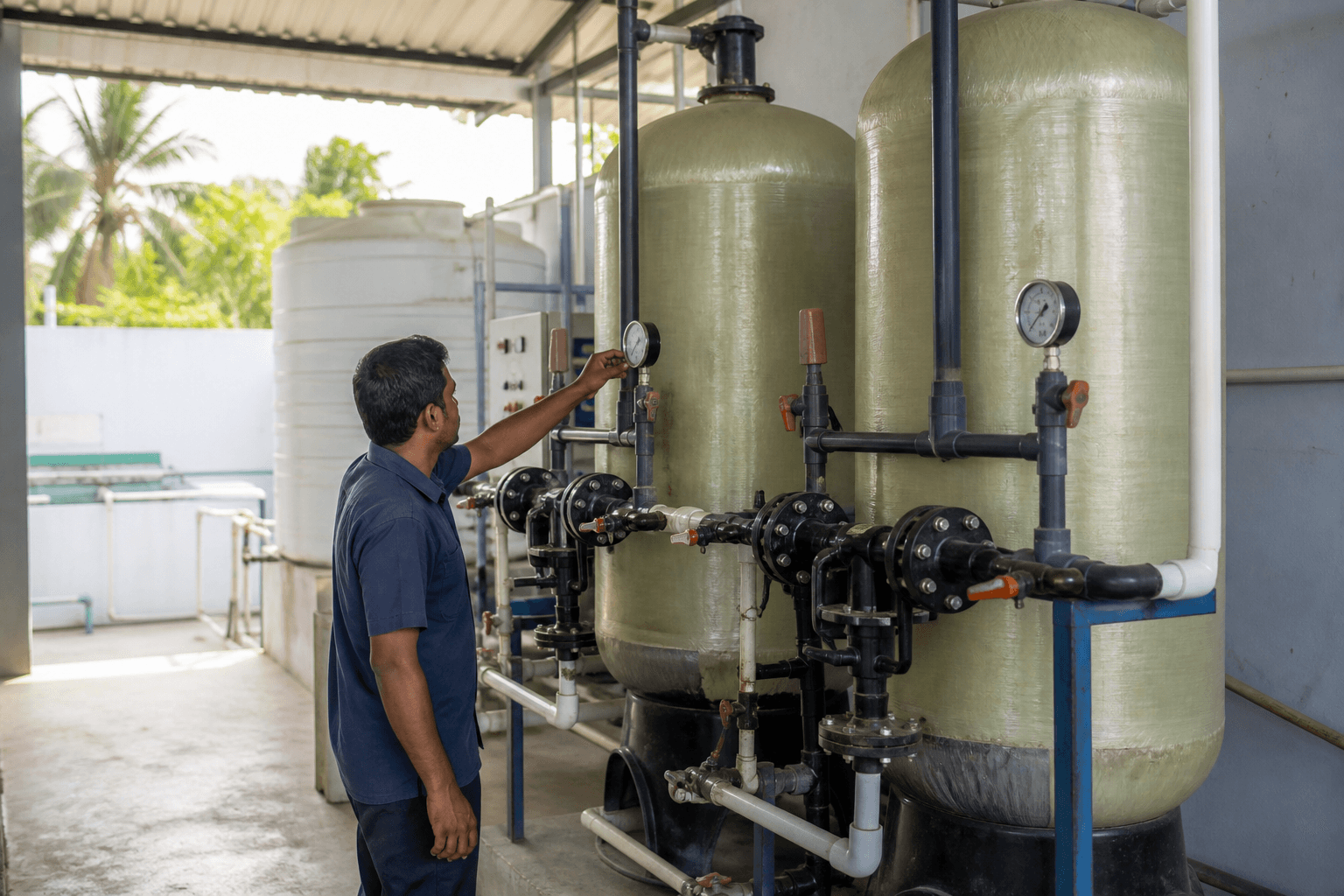
Tertiary treatment is the final polishing stage, applied when treated water needs to meet a higher standard than biological and physio-chemical treatment alone can guarantee. A pressure sand filter removes remaining fine particles while an activated carbon filter adsorbs dissolved organics, odours and trace chemicals. This stage matters most where treated water is reused on-site, for irrigation, cooling or washdown.
- Pressure sand filter
- Activated carbon filter
Talk To Our Engineers
Still Deciding Which Service Fits Your Site?
Every plant we design starts with a site study. Tell us your requirement and we'll recommend the right system, no obligation.